One of the fastest reversals in the 2026 weight-loss market lasted barely two days.
On February 5, Hims & Hers began offering access to a compounded oral semaglutide product for an introductory price of $49 for the first month. The launch arrived only weeks after Novo Nordisk introduced the first FDA-approved oral GLP-1 medicine for weight management: the once-daily Wegovy pill.
By February 7, the Hims product was gone.
The withdrawal followed an unusually direct FDA announcement, a promised legal challenge from Novo Nordisk and growing scrutiny of telehealth companies that marketed compounded GLP-1 products as substitutes for approved drugs.
The essential distinction: Hims was not selling generic Wegovy. It was offering a compounded drug that had not been reviewed or approved by FDA.
Why the $49 price drew immediate attention
The price difference made the launch impossible to ignore. Reuters reported that Hims offered the first month for $49—about $100 below the starting price then advertised for branded Wegovy pills.
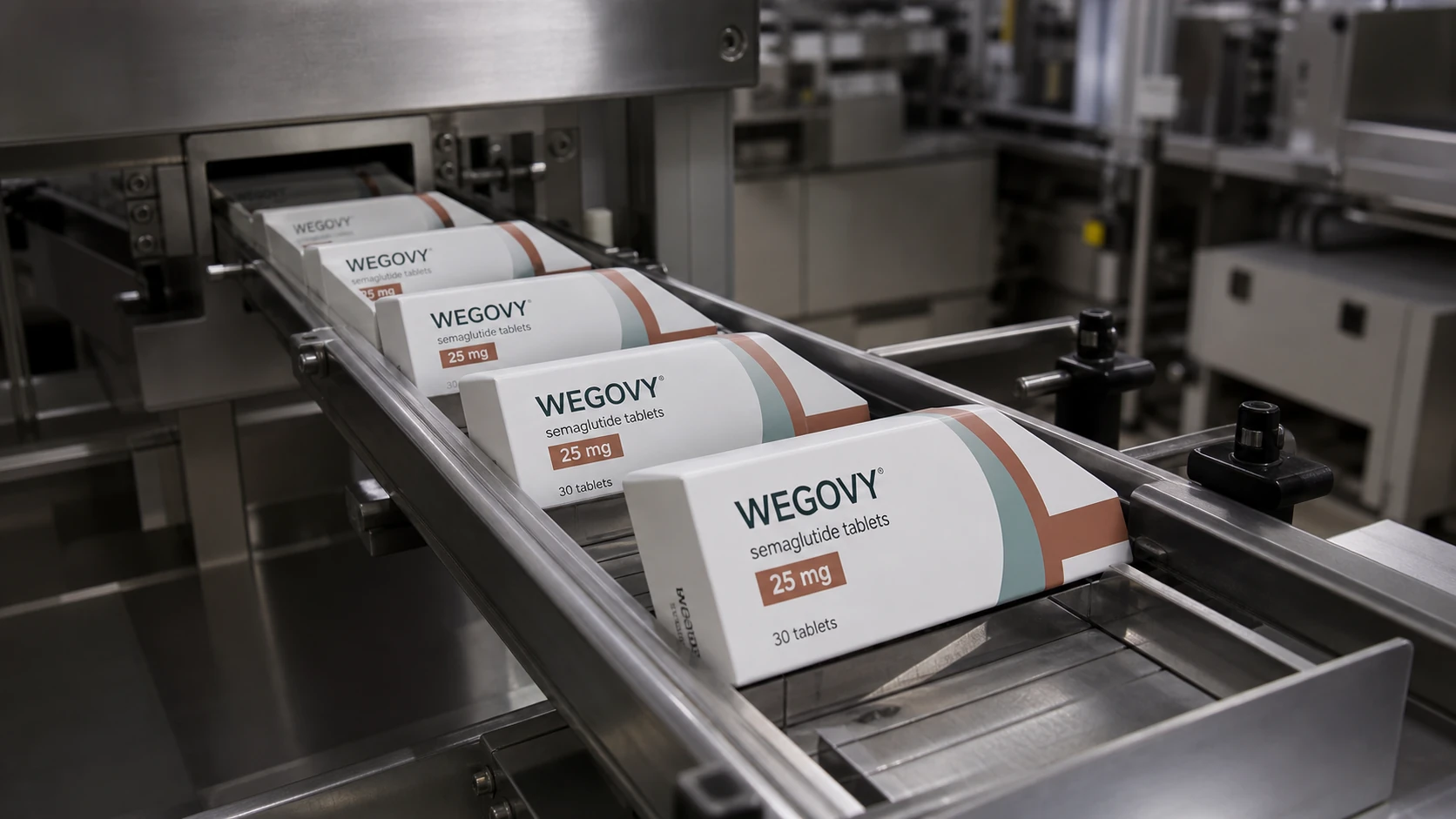
Novo Nordisk had received FDA approval for the 25 mg once-daily Wegovy tablet on December 22, 2025. The company said the medicine uses oral semaglutide and became the first oral GLP-1 therapy approved in the United States for weight management.
Hims’ product also contained semaglutide, but that did not make it the same medicine. Novo said its tablet relies on SNAC absorption technology and accused Hims of mass-marketing an unapproved imitation. Compounded drugs also do not go through FDA’s premarket review for safety, effectiveness and manufacturing quality.
The FDA warning changed the calculation
On February 6—one day after the Hims launch—FDA announced that it intended to restrict GLP-1 active pharmaceutical ingredients used in non-approved compounded drugs that were being mass-marketed as alternatives to approved products.
The agency named Hims & Hers directly.
FDA also drew a bright line around advertising. It said companies could not describe compounded products as generic versions of approved drugs, claim they were the same as FDA-approved medicines or imply that they were clinically proven to produce the same results.
The announcement did not outlaw every compounded GLP-1 prescription. Compounding can remain lawful in limited circumstances, particularly when an individual patient has a documented clinical need that cannot be met by a commercially available product. What FDA challenged was the use of those exceptions to support broad, consumer-facing sales of products presented as interchangeable copies.

Hims reversed course after two days
On February 7, Hims said it had held “constructive conversations with stakeholders across the industry” and had decided to stop offering the pill. The Associated Press reported that the reversal came two days after the launch and one day after FDA’s enforcement announcement.
Novo Nordisk filed a patent-infringement lawsuit on February 9. Novo’s complaint announcement covered the withdrawn pill as well as compounded injectable semaglutide products sold through the Hims platform.
The sequence showed how quickly the economics of telehealth compounding could collide with federal drug law and pharmaceutical patents. A product designed to undercut a branded medicine on price survived less than a weekend once regulators and the patent holder moved.
Then the rivals became partners
The story did not end in court.
On March 9, Hims and Novo Nordisk announced a deal that brought branded Wegovy pills and injections, along with Ozempic, to the Hims platform. Novo agreed to dismiss its lawsuit. Hims said it would shift its U.S. weight-loss business toward FDA-approved medicines, stop broadly advertising compounded GLP-1 products and reserve compounding for limited cases in which a provider determined it was clinically necessary.
Hims described the agreement as a strategic shift. The Associated Press called it a collaboration that ended the immediate legal dispute.
The reversal was striking: in February, Novo called the Hims pill an unapproved copy. In March, Novo turned the same telehealth platform into a distribution channel for its approved products.
The larger lesson for compounded GLP-1 drugs
The Hims episode was not only a fight about one company or one pill. It exposed the narrowing space between personalized compounding and mass-market competition with approved drugs.
Telehealth platforms can make prescribing, payment and delivery easier. Compounding pharmacies can meet legitimate patient-specific needs. But neither function automatically permits a company to build a national product line around what regulators consider an essentially copied medicine.
That is why the story moved so quickly. The $49 price created the attention. FDA’s enforcement position and Novo’s patent claims created the risk. The eventual partnership revealed the most durable business path: selling the approved product rather than trying to build a mass-market substitute around compounding exceptions.
Source record
- Associated Press report on the two-day Hims reversal
- FDA announcement on mass-marketed compounded GLP-1 drugs
- Novo Nordisk statement on the Wegovy pill approval
- Novo Nordisk announcement of its Hims patent lawsuit
- Hims & Hers announcement of its later Novo Nordisk agreement
- Associated Press report on the Hims–Novo partnership
Research Pep News provides news and educational information, not medical advice. Compounded drugs are not FDA-approved, and the availability or appropriateness of any prescription treatment must be determined by a qualified clinician.
This report analyzes a regulatory or industry development. It is news and educational information, not medical advice.