An insurance denial does not make demand for a GLP-1 disappear. It changes who gets the sale.
The online trail is now visible across platforms. A recent Research Pep News trend review found an Instagram post about a GLP-1 insurance denial with about 3,100 likes. Facebook group members were asking which plans still covered treatment. Google users searched for reviews of telehealth sellers. Reddit users kept returning to price.
National data show the same movement. In a July 2026 Gallup survey, 19% of current GLP-1 users reported taking a compounded or custom-mixed product. Among people who had switched from a brand-name drug to a compounded version, 66% named cost or insurance coverage as the main reason.
That is the access story in one number. High prices and coverage restrictions are not merely causing patients to abandon treatment. They are redirecting patients into cash-pay brands, compounded products and a research market that can offer the same peptide for a fraction of the U.S. pharmacy price.
The people making that comparison are responding rationally to a distorted market. They can see that peptide production is not inherently a thousand-dollar-a-month proposition. They can also see that Americans are charged far more for brand-name drugs than patients in peer countries. The grey market did not create that price gap. It grew inside it.
The direct answer: First identify what the plan actually denied and appeal when a real path exists. Then compare the total price and the evidence attached to the specific product. Approved, compounded and research-market products sit in different legal and oversight categories; those labels do not chemically test a vial. Identity, amount, purity, endotoxin and sterility are lot-specific questions. A regulatory category changes the evidence available and the recourse when something goes wrong. It does not settle product quality by itself.
The coverage gap is large enough to create a parallel market
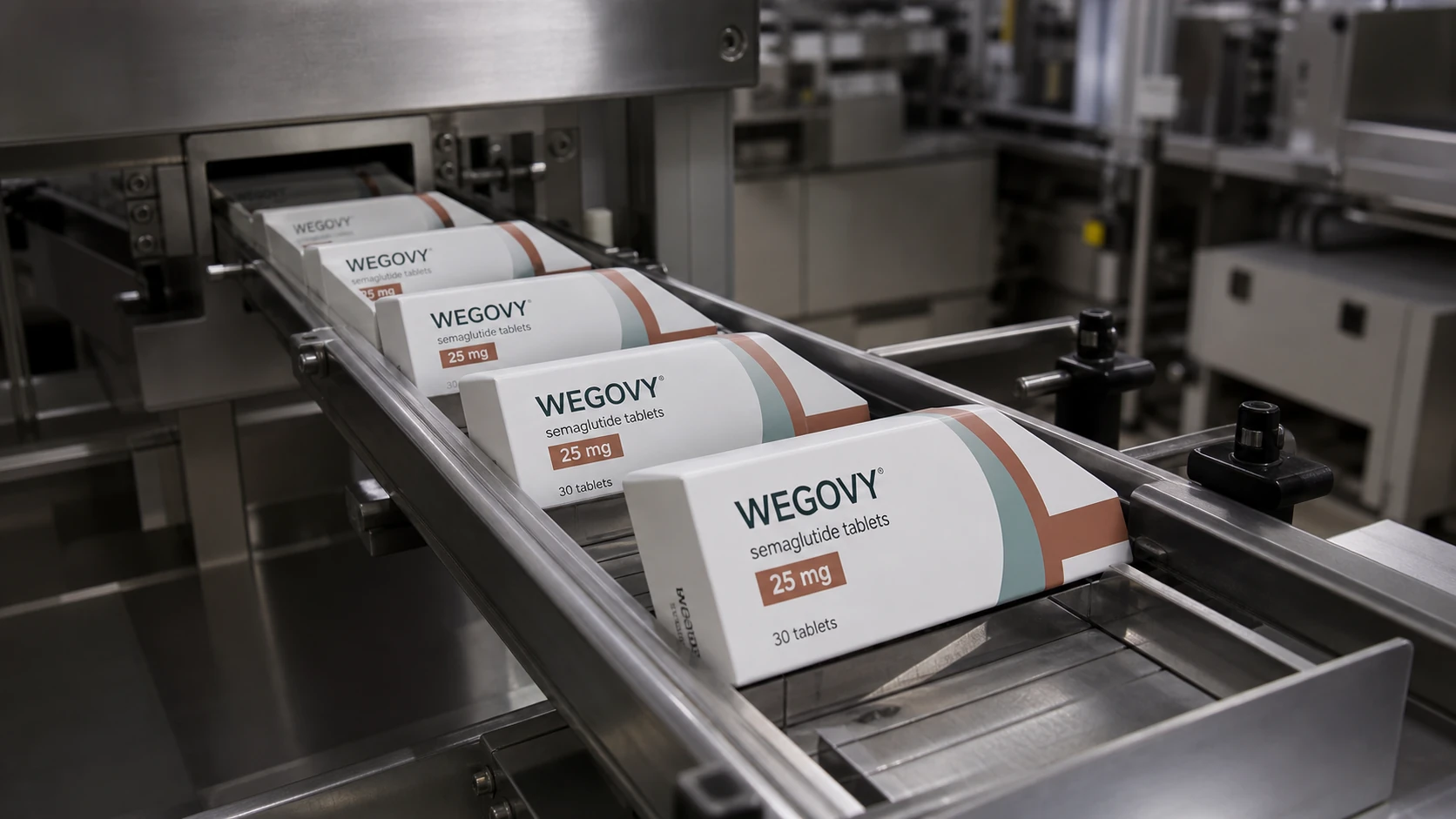
The sticker price still sets the pressure. Novo Nordisk lists Wegovy at $1,349.02 per package before discounts or rebates. In KFF’s 2025 employer survey, only 19% of firms with 200 or more workers said their largest health plan covered GLP-1 drugs when used primarily for weight loss.
Even coverage does not guarantee affordability. A November 2025 KFF poll found that 55% of insured people who had used a GLP-1 said the cost was difficult to afford. Twenty-seven percent of insured users said they had paid the full cost themselves. Seventeen percent of all users reported obtaining a GLP-1 from an online provider or website, up from 11% in KFF’s May 2024 poll.
The resulting funnel is predictable: a clinician writes a prescription, the plan rejects it, a branded cash price remains unaffordable, and an online advertisement offers a vial for a fraction of the price.
The cheaper offer can represent lawful patient-specific compounding, a research-labeled peptide, an imported product or a counterfeit pen. Those are materially different arrangements. “Online GLP-1” is a purchasing channel, not a quality category, and “grey market” covers too much ground to function as a verdict on any individual vial.
The U.S. price is a market choice, not a manufacturing fact
The scale of the price gap is difficult to defend as a production-cost story. A 2024 JAMA Network Open economic evaluation modeled a sustainable cost-based price for injectable semaglutide at $0.89 to $4.73 per month at a 0.77 mg weekly dose. The estimate included active ingredient, formulation, device, packaging, logistics, operating costs, tax and a profit margin. It was a model for competitive generic-scale production, not Novo Nordisk’s confidential factory cost, and it did not attempt to recover the full cost of drug discovery or clinical development.
That distinction matters. It does not make a $1,349 U.S. package price look like the inevitable cost of making semaglutide. It shows how much room exists between production economics and what the U.S. market has been willing to charge.
Americans also pay more than patients abroad. A federal ASPE/RAND comparison using 2022 data found U.S. prices across all prescription drugs were 2.78 times prices in 33 OECD comparison countries. Brand-name prices were at least 3.22 times as high after estimated U.S. rebates. In a 2023 Peterson-KFF comparison, Ozempic’s U.S. list price was $936 per month versus $169 in Japan, and Wegovy was $1,349 in the United States versus $328 in Germany.
List prices, net prices and temporary cash programs are different figures. The international pattern remains clear: U.S. patients are not paying more because semaglutide becomes unusually expensive to manufacture after crossing the border. They are paying what a fragmented pharmaceutical market, patent protection and limited purchasing leverage allow companies to collect.
“Denied” can mean four different things
The rejection message at the pharmacy counter is often too short to explain the real problem. The written denial and plan documents matter because the remedy depends on the denial type.
1. Prior authorization was not approved
The drug is on the plan, but the plan requires clinical information before it will pay. Criteria can include diagnosis, body-mass index, weight-related conditions, earlier treatment attempts or documentation that a preferred drug was tried first.
The first step is to obtain the written criteria and the exact reason the request failed. A missing chart note, outdated weight, incorrect diagnosis code or incomplete history can often be corrected and resubmitted. A medical-necessity appeal should address the plan’s stated criteria point by point, not simply repeat that the clinician prescribed the drug.
A 2025–2026 prospective study at UC Davis found that prior authorizations for weight-loss GLP-1s were approved 48% of the time, compared with 90% for diabetes GLP-1 requests in the study. The gap shows why the indication and documentation matter.
2. The employer excluded weight-loss drugs
An exclusion means the benefit was never included in the plan. The insurer or pharmacy-benefit manager may be administering a decision made by the employer, especially in a self-funded workplace plan.
A routine prior authorization cannot create a benefit the plan excludes. Ask the benefits administrator for the Summary Plan Description, the prescription formulary and the specific exclusion language. Ask whether treatment is covered for another FDA-approved indication that actually applies, such as type 2 diabetes, established cardiovascular disease under Wegovy’s label, or moderate-to-severe obstructive sleep apnea under Zepbound’s label. A diagnosis must be real and documented; changing a code to obtain coverage is not a workaround.
Employees can also ask whether the employer accepts benefit-exception requests or plans to reconsider the exclusion at renewal. That is a benefits decision, separate from a medical-necessity appeal.
3. The prescribed brand is nonformulary or nonpreferred
The plan may cover a different GLP-1, require step therapy or place the requested drug on a higher cost-sharing tier. A formulary exception asks the plan to cover the requested drug because covered alternatives were ineffective, caused adverse effects or are expected to be inappropriate for a documented reason.
Marketplace plans provide a drug-exception process and a right to appeal an unfavorable decision. Medicare Part D also permits formulary and utilization-management exceptions when the prescriber submits a supporting medical statement. These processes cannot override Medicare’s underlying statutory exclusion for a drug used only for weight loss.
A separate route opened on July 1, 2026. The temporary Medicare GLP-1 Bridge provides certain eligible Part D enrollees Foundayo, Wegovy or the Zepbound KwikPen for a $50 monthly copay through December 2027. It operates outside the regular Part D benefit and uses specific BMI and comorbidity criteria. An eligible Medicare patient should check the Bridge before moving to cash pay; a formulary appeal is not the application for that program.
4. The prescription does not match the covered indication
Ozempic and Mounjaro are diabetes brands. Wegovy and Zepbound have weight-management indications. Wegovy also has cardiovascular-risk-reduction and MASH indications, while Zepbound has an obstructive-sleep-apnea indication for adults with obesity. Plans adjudicate the product, diagnosis and benefit together.
Off-label prescribing can be medically legitimate. Insurance coverage does not automatically follow. The practical question is whether the plan covers the prescribed product for the patient’s documented condition.
Use the appeal when it is real—then compare markets
Start with the denial notice because it may reveal a route back to coverage. An appeal is a financial option, not a moral obligation to remain in the brand-name channel at any price.
- Ask the plan or pharmacy-benefit manager for the denial reason, the relevant policy, the formulary and every deadline.
- Confirm whether the request failed because of missing information, unmet criteria, a nonpreferred drug or a true benefit exclusion.
- Ask the prescriber to include the diagnosis, indication, relevant measurements, prior treatments, adverse effects and reason covered alternatives are not suitable.
- File the internal appeal within the stated deadline. Private employer plans covered by ERISA generally must allow at least 180 days to appeal a denied health claim.
- Use the external-review instructions in the final denial when they apply. State insurance consumer-assistance offices and the U.S. Department of Labor’s Employee Benefits Security Administration can help identify the correct route.
- Ask the employer benefits team directly when the plan excludes obesity medication. The carrier cannot approve a benefit the employer did not buy.
An appeal is strongest when it answers the plan’s reason for denial with patient-specific evidence. It is weakest when it treats every rejection as a medical judgment. A benefit exclusion may leave no meaningful appeal at all, which is precisely why patients begin comparing other markets.
Cash-pay brand programs changed the comparison, not the underlying economics
The list price is no longer the only branded cash price.
As of August 1, 2026, Novo Nordisk’s self-pay program lists Wegovy tablets at $149 per month for the 1.5 mg and 4 mg doses, with the 4 mg price scheduled to change after August 31. The 9 mg and 25 mg tablets are $299. New self-paying patients can obtain the 0.25 mg and 0.5 mg Wegovy pens for $199 per month for their first two fills; the standard pen price is $349 per month. Program terms can change.
Lilly’s direct self-pay prices for Zepbound are $299 for 2.5 mg, $399 for 5 mg, $499 for 7.5 mg and $699 for 10 mg through 15 mg. A refill program can reduce the 7.5 mg through 15 mg doses to $449 when its timing and eligibility conditions are met.
These prices are lower than the old sticker price and still sit far above modeled production economics. A discount from an inflated anchor is useful to someone who can afford it; it is not the same as an affordable market.
A telehealth advertisement is not automatically the least expensive option, and a manufacturer portal is not automatically the best value. Compare the price at the dose likely to be used after titration, then add membership fees, clinician visits, laboratory charges, supplies, shipping and cancellation terms. Confirm whether the price is introductory, requires a large prepayment or rises with dose.
Money spent through a manufacturer self-pay program outside insurance generally does not count toward the plan deductible or out-of-pocket maximum. The product remains the FDA-approved brand dispensed with a prescription.
Compounded and grey-market are oversight categories, not quality grades
Lawful compounding can supply a patient-specific clinical need that an available approved product does not meet or a drug that is not commercially available. A compounded product is not an FDA-approved generic, and FDA does not review each compounded product for safety, effectiveness and quality before marketing.
Traditional 503A pharmacies generally compound for an identified patient based on a prescription. Federal law restricts regular production of products that are essentially copies of commercially available drugs. A prescriber can document a patient-specific change that creates a significant clinical difference, such as a strength or formulation need that the approved product cannot meet. Lower price alone is not that clinical difference.
503B outsourcing facilities operate under a different federal framework, including current good manufacturing practice requirements and FDA adverse-event reporting. Registration is not FDA approval and does not prove that every lot meets specification. FDA’s public list shows registration, inspection, Form 483, recall and action information for the specific facility.
The research market sits outside that pharmacy framework. That changes what may legally be claimed, how a product is sold and what recourse exists. It does not mean every research vial is chemically poor, just as a pharmacy label does not prove that every compounded vial is excellent. A product either meets identity, assay, purity and microbiological specifications or it does not.
In March 2026, FDA announced warning letters to 30 telehealth companies over false or misleading compounded-GLP-1 claims, including implied sameness with approved drugs and obscured sourcing. Those letters address marketing and legal compliance. They should not be misreported as laboratory findings about every compounded product.
Evaluate the seller, service and product separately
A popular telehealth brand can be a marketing and prescribing platform rather than the pharmacy that makes or dispenses the drug. A research-market seller has a different structure again. The website, service model and physical product should not be collapsed into a single reputation score.
Before paying, verify:
- The prescriber: full name, professional license, state and disciplinary record. The clinician should be licensed where the patient is located and should review medical history, current medicines, contraindications, pregnancy potential when relevant, adverse effects and follow-up.
- The dispensing pharmacy: legal name and physical location. Check the license with that state’s board of pharmacy. If the company cites 503B status, check FDA’s current outsourcing-facility list and inspection information.
- The exact product: active ingredient, dosage form, concentration or labeled amount, lot identifier, storage requirements and the evidence attached to that lot. “Same as” and “generic Wegovy” are legal and therapeutic claims, not substitutes for analytical data.
- The clinical process: who answers dosing questions, how titration is decided, how urgent adverse effects are handled and whether records can be sent to the patient’s regular clinician.
- The full price: dose-based increases, membership, refills, automatic shipment, cancellation, refunds, labs and shipping.
Convenience is not evidence of poor care or poor chemistry. A July 2026 JAMA secret-shopper study found wide variation in the clinical process at direct-to-consumer services: of 49 websites contacted, 45 issued a prescription and 34 mailed medication. Thirty-three prescribing sites did not require a real-time conversation with a clinician; two compounded prescriptions were issued in five minutes or less. That study evaluated prescribing practices, not the chemical quality of the shipped lots.
Grey-market quality is a batch question, not a moral category
Some research GLP-1 products may be analytically comparable to compounded products. That is a plausible, testable statement: the laboratory methods used to identify a peptide and measure its amount, purity, endotoxin and sterility do not change according to the seller’s regulatory category.
The public evidence is not broad enough to estimate how often research-market GLP-1s meet a given specification. A serious quality assessment therefore stays with the specific lot. Useful evidence can include:
- Identity: whether an appropriate method such as mass spectrometry identifies the claimed peptide.
- Assay or content: how much active peptide is actually present, which is different from percentage purity.
- Purity and impurities: the analytical profile and whether the result comes from the same lot being sold.
- Endotoxin and sterility: separate microbiological questions that a basic purity chromatogram cannot answer.
- Chain of custody: whether the tested sample can be connected credibly to the vial and lot offered to the buyer.
A certificate of analysis is evidence, not magic. A lot-specific report from an identifiable laboratory with appropriate methods is more informative than a generic PDF recycled across batches. Independent customer-submitted testing can add information when the sample identity and chain of custody are clear. None of these documents establishes clinical safety or turns a research product into an approved medicine; they answer narrower and still valuable quality questions.
The evidence supports verification, not stigma. Public data are too limited to grade the research market as a whole, and quality can vary across research and compounded channels. The defensible standard is to judge only what can be established about a specific lot: identity, content, purity, endotoxin, sterility, laboratory independence and chain of custody. Regulatory category describes oversight; it does not substitute for analytical evidence.
The policy is pushing risk downstream
Insurers and employers are reacting to a budget problem created in large part by price: a drug class with a very large eligible population is sold at hundreds or more than a thousand dollars per month and is often used long term. Restricting coverage reduces the plan’s immediate spending.
It does not erase demand. It transfers the search, payment and quality-assessment burden to patients. Gallup’s finding that cost and insurance drove two-thirds of switches from brand-name to compounded GLP-1s measures that transfer directly.
The rational policy response is not to stigmatize compounding or squeeze the grey market while leaving the price engine untouched. That protects the expensive channel without resolving why people left it. Durable reform means lower prices, broader coverage, transparent cash terms, real competition and more accessible independent testing. Enforcement still has a role against counterfeiting, fabricated laboratory reports and nondelivery fraud; those are specific acts, not synonyms for the grey market.
Bottom line
When a GLP-1 is denied, the next move should begin with the paperwork and end with an honest comparison of markets:
- Identify whether the problem is prior authorization, formulary placement, indication or a benefit exclusion.
- Appeal with evidence that answers the stated reason when the plan provides a genuine exception path.
- Compare current manufacturer self-pay prices at the maintenance dose with compounded and research-market pricing.
- Do not confuse regulatory status with a laboratory result. Ask what is actually known about the specific product and lot.
- Separate product quality from clinical oversight, seller reliability and legal status. They are different questions.
The grey market does not begin with a mysterious website. It begins with a patient who still wants treatment after the regulated system has said no—or has quoted a price that bears little relationship to competitive production economics.
Research Pep News is not recommending research-labeled GLP-1s for human use. We are also not going to pretend that every grey-market vial is junk or that every person who considers one is reckless. The honest position is simpler: high U.S. prices and insurance denials created this demand, and quality must be judged with evidence rather than branding or fear.
Source record
- Gallup National Health and Well-Being Index, July 2026
- KFF 2025 Employer Health Benefits Survey
- KFF November 2025 GLP-1 use and affordability poll
- JAMA Network Open cost-based price estimates for diabetes medicines
- ASPE/RAND international prescription-drug price comparison
- Peterson-KFF comparison of GLP-1 list prices across peer countries
- NovoCare Wegovy list price and savings options
- NovoCare Wegovy self-pay price guide
- Lilly Zepbound coverage and self-pay terms
- UC Davis study of prior authorizations for GLP-1 drugs
- U.S. Department of Labor guide to health-benefit appeals
- HealthCare.gov prescription drug exceptions and appeals
- CMS Medicare Part D formulary and utilization-management exceptions
- Medicare GLP-1 Bridge eligibility and coverage
- FDA concerns with unapproved GLP-1 drugs
- FDA’s April 2026 clarification of GLP-1 compounding policy
- FDA registered 503B outsourcing-facility list
- FDA warning letters to 30 telehealth companies, March 2026
- JAMA secret-shopper study of online GLP-1 prescribing
- FDA BeSafeRx online-pharmacy resources
- Instagram insurance-denial post identified in the trend review
- Facebook group identified in the trend review
- Google Trends query for telehealth GLP-1 reviews
- Reddit discussion identified in the trend review
Research Pep News provides news and educational information, not individualized medical, legal or insurance advice. Coverage rules and manufacturer programs vary and can change. Compounded drugs are not FDA-approved. Research-labeled products are not approved for human use, and regulatory status alone is not a laboratory assessment of any specific lot.
This report analyzes a regulatory or industry development. It is news and educational information, not medical advice.